Video Description
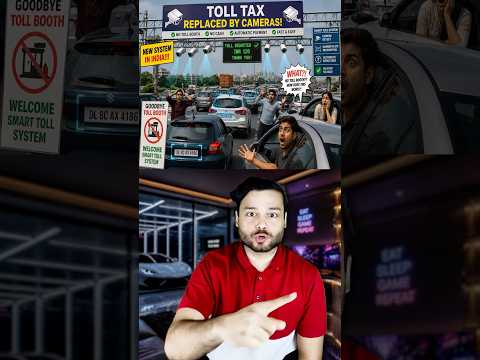
The Government of India has recently taken a major step toward modernizing highway travel by introducing a barrier-less tolling system in Gujarat. The first such project has been launched on a stretch of National Highway-48, marking a shift away from traditional toll plazas where vehicles are required to stop and pay. This initiative, led by Nitin Gadkari, is part of a broader plan to make highway travel faster, smoother, and more efficient across the country.
Under this new system, toll booths are essentially removed and replaced with overhead gantries equipped with advanced cameras and sensors. These include Automatic Number Plate Recognition (ANPR) cameras that scan the vehicle’s registration number as it passes at normal speed. The system is integrated with FASTag, allowing toll charges to be deducted automatically from the user’s linked account. Because there are no physical barriers, vehicles do not need to slow down or stop, which helps reduce traffic congestion, save fuel, and cut travel time significantly.
This model is known as Multi-Lane Free Flow (MLFF) tolling, and it represents a transition from fixed toll collection points to a more seamless, digital process. Importantly, this does not mean that highways are becoming free to use. Instead, the method of collecting tolls is changing—from manual or semi-automatic collection at booths to fully automated, camera-based deduction systems that operate in the background as vehicles move.
Looking ahead, the government plans to expand this system across more highways in India by 2026. There are also discussions about introducing a satellite-based tolling system using GNSS (Global Navigation Satellite System). In that model, tolls would be calculated based on the actual distance traveled rather than a fixed fee at certain points. This could make the system fairer and more precise, especially for long-distance travel.
Overall, the move toward camera-based and eventually satellite-based tolling reflects a broader push toward digital infrastructure and smart transportation. By eliminating long queues at toll plazas and improving efficiency, the government aims to create a faster and more user-friendly highway experience while maintaining revenue collection through automated means.