Video Description
Get FREE 2-week access to your personalized training and nutrition plan here:
https://bws.plus/1a
Full Body Workout Routine:
https://www.youtube.com/watch?v=B12MXF0bSFo&
Protein Jell-O Yogurt Bowl recipe (~300 kcal):
1 pack sugar-free Jell-O
1½ cups 0% fat Greek yogurt
½ scoop Built With Science French Vanilla Whey Protein Powder
100 g strawberries
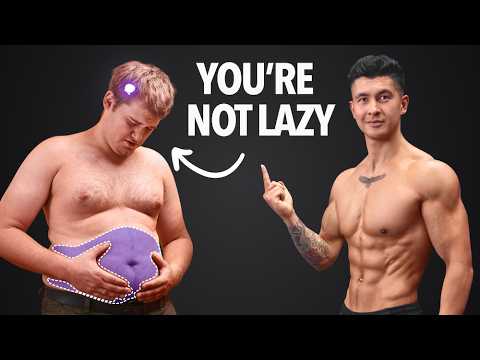
Your hypothalamus is the tiny control center that regulates your hunger through satiety signals, decides what you crave, and even how many calories you burn every day. And it’s designed to keep you fat. Because 500 million years ago, your biggest threat was starving to death. So your hypothalamus evolved to do whatever it takes to protect your fat stores. The problem? That ancient wiring still controls you today. You can’t delete it. But once you understand the three weapons your hypothalamus uses for appetite control and stop you from getting lean, you’ll know exactly how to outsmart it and how to reduce hunger— and make fat loss feel automatic. Starting with one of the best diet hacks out there …
WEAPON #1: Hunger. Think of the hypothalamus as your lovely grandmother, who always worried you’re not eating enough and constantly pushing you to have “just one more bite.”
But the longer you diet and the more fat you try to lose — especially that last layer of stubborn fat — the more pushy grandma gets. This is why dieting can feel manageable at first, but gets considerably harder. Fortunately, there are 2 types of foods that can hack your hunger cues. The first one is protein. It’s one of the few nutrients that can shut your hunger down at the source. But how much protein are we talking about? Aim for at least 30 grams per meal.
The second type of food for appetite control? Volumous, highly satiating foods. Think foods high in water, fiber, and bulk — like potatoes, oats, and fruit. For me, as an asian rice lover, my favorite hack is using half rice and half peas for my meals. But if you have a big sweet tooth, you should try my protein Jell-O yogurt bowl recipe. Half the calories of cheesecake.
WEAPON #2: Cravings. Have you ever finished dinner, felt stuffed, and yet 20 minutes later found yourself standing in front of the pantry “just to look”? That’s not hunger — that’s your hypothalamus tricking you into wanting more. And your environment can make this so much worse. So the simplest fix is to not buy your trigger foods in the first place — or at least introduce friction by keeping them in the deepest part of your pantry.
But have you ever noticed how some days, your cravings and hunger are way worse than others? Well, when you’re sleep-deprived, even for just a single night, your hypothalamus responds by messing up your satiety signals — cranking up your hunger hormones and decreasing your fullness hormones. Add high stress on top of that, and your hypothalamus constantly thinks you’re in danger. Nudging you to eat more in case you need energy to “fight or flee” — even if the stress is from work or life rather than survival. The good news is even just one extra hour of sleep per night or a 10 minute walk when you’re feeling stressed out can go a long way.
WEAPON #3: Slows Metabolism. When you start losing fat, your hypothalamus doesn’t just ramp up hunger — it quietly dials down your activity without you noticing. Combine that with the fact you’re lighter now, and your daily calorie burn plummets even more. Exercise is your key to fighting back. The first is plain old walking. Every day, you burn calories from three main “buckets”: keeping your body alive, structured exercise, and NEAT — non-exercise activity thermogenesis. And here’s the wild part — NEAT often burns far more calories than your workouts. Research shows it can vary by up to 2,000 calories per day between two people of the same size. That’s like jogging for three hours! That’s why walking — and tracking your daily steps — is so powerful. Steps expose those invisible reductions your brain is hiding from you and act as a constant “wake-up signal” to your hypothalamus that you’re still active and energized.
But movement isn’t enough. If you don’t pair this with the next exercise, the weight you lose is far more likely to come from muscle — and research shows the more muscle you lose, the more fat you regain later. Scientists still don’t know exactly why this happens, but the hypothalamus is the prime suspect. Luckily, strength training flips this signal. As for how many workouts per week is enough, even just 2 to 3 well programmed full body workouts per week should do the trick.
But have you ever lost some weight then go back to see Grandma, and she completely freaks out? Tells you you’re too skinny, and forces food down your throat. The hypothalamus acts the same way. So one the most underrated diet hacks is by aiming for fat loss that’s no more than 0.5–1.5 lbs or 0.23–0.68 kg per week, which equates to a deficit that’s roughly 300–700 calories below maintenance.