Video Description
A man conducts an experiment.
At Yale University in the early 1960s, a professor is conducting an experiment. A wide variety of people participate, paid to administer a learning exercise via intercom to an unseen subject in another room. If the unseen learner gets the answer wrong, the test subject -- called a "teacher" in the experiment -- administers a shock, which increases in voltage with each wrong answer. The professor watches closely from another room.
The teachers are told that they're participating in an experiment about learning, and whether punishment is an effective tool for it. But the real experiment is on something else entirely, and the unsettling exercise uncovers disturbing truths about human nature.
Directed and written by Moth Parsons, this disquieting short drama is a dark meditation on psychological pressure and the elasticity of man's morality. Shot with a dark, claustrophobic visual approach with a stylized. airless feel, the narrative is framed around a psychological experiment. But it is less about one individual's particular psychology than about humankind as a whole, especially when faced with a stern, all-encompassing authority.
The narrative begins with one man starting the experiment from the beginning, as he is told what his task is and then is set up at his station; played by actor Josh Tyson, he even gets a sample of the shocks he will administer. But the storytelling widens its lens to include a larger number of participants, who take part in the experiment as "teachers." The learner has a hard time getting the exercises right, and as his mistakes pile up, the voltage is increased, becoming more painful with each wrong answer. As the learner becomes increasingly distressed, the teachers often protest, but they are told firmly to keep going.
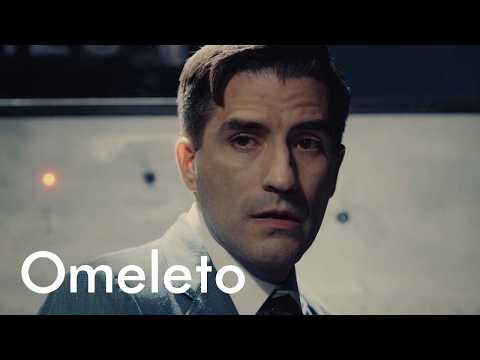
The professor and his support staff remain unseen until about halfway through the film, though we and the teachers feel their ominous presence through how they occasionally crowd the frame and bark out commands with no room for questioning. The professor watches closely, his eye trained on the real subject of the experiments: the teachers, not the learner. The real dramatic question of the film is not whether the learner will learn, but whether any of the teachers will refuse to keep going with what is becoming torture. The ensemble cast is all excellent, rendering a wide variety of responses from anger to resignation to simple capitulation. As the professor, actor John Wilkins goes from serious professional curiosity to a slow, dawning horror at how no one refuses.
Suspenseful, cerebral and compelling, MEMORY PROJECT is based on the real-life experiments of Stanley Milgram, who eventually published his findings as a behavioral study on obedience. He initially conceived the experiment as Nazi war criminals went on trial for the atrocities perpetrated in World War II; he was curious about how people could participate in inhumane actions, despite their misgivings, reluctance and own distress. Milgram's writings went on to become classics in social psychology. But the issues his work and this film's narrative raise are still applicable today, unsettling us with questions about man's basic decency in the face of increasingly hardening authority.
MEMORY PROJECT. Courtesy of Moth Parsons at https://timothyparsons.me.