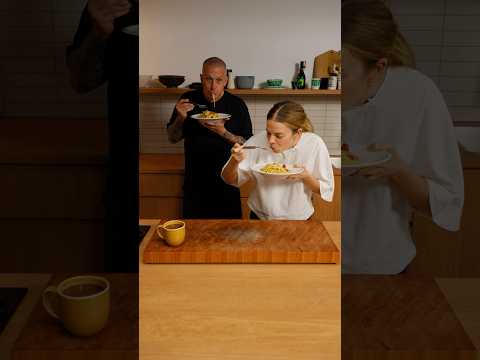
Video Description
Carbonara
Serves: 2
Prep time: 5 mins
Cook time: 15 mins
Ingredients
200g Guanciale
300g spaghetti
200g pecorino cheese
3 egg yolks
Sea salt and cracked black pepper, to season
Method
Place a large pot of water on to boil with 2 pinches of salt in it.
Dice the guanciale into 1cm cubes. Place in a cold frying pan, then place over a medium heat. Cook for 8-10 minutes, stirring often, until browned and crisp.
Transfer the guanciale to a plate and drain off the fat from the pan into a small bowl. Remove the pan from the heat and let it cool completely.
Add the pasta to the boiling water and cook until al dente.
Grate the pecorino into a large mixing bowl. Season with pepper then add the egg yolks.
Ladle in about 125ml (½ cup) of the hot pasta water to the egg mixture and mix quickly to combine and start to melt the cheese.
Return ¾ of the guanciale and 1 tablespoon of the reserved fat to the cooled frying pan, off the heat, along with the egg and cheese mixture.
Transfer the cooked pasta to the pan with cheese sauce and stir quickly to create an emulsified sauce. If there's not enough heat in the pan to melt the cheese, then place the pan over the boiling pasta water. This will work as a double boiler to slowly heat the cheese up enough to melt it. If you put it back on over a direct heat, you have a high risk of splitting the sauce.
Spoon into serving bowls and garnish with the remaining guanciale and some more black pepper.
Recipe notes
Recipe origins and authenticity: Believed to have originated in Rome, Italy in 1944 during wartime and using a combination of American soldiers’ rations and Italian staples. So from bacon and eggs married with dried pasta and cheese….a simple dish was born which is now popular the world over….but no cream!
Cook support: feel free to add some more of the hot pasta water to the eggs and cheese if you feel it needs (If the cheese is not melting).
If the sauce is not thickening up when the pasta has been added and mixed through, then place the frying pan over the steaming pasta water saucepan and continue mixing with the heat. Do not place it over direct heat or the sauce could split.
Sourcing: Guanciale is an Italian salt-cured pork cheek, available from delicatessens, butchers and quality green grocers.
Substitutions: You could use some speck or bacon if you can’t get your hands on the guanciale.
Storage: This is best eaten straight away as the sauce is absorbed by the pasta once mixed. If there are leftovers, then they should be refrigerated in an airtight container.
Serving ideas: You could opt for a simple light salad to go alongside the pasta or some crusty bread.