Video Description
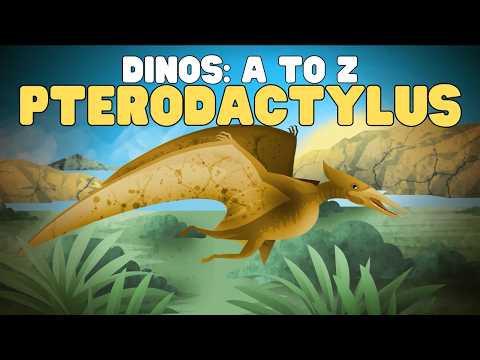
In this video series for kids, we are learning about dinosaurs from A to Z. Today’s dino is Pterodactylus!
Have you ever heard of the Pterodactylus? You may know this ancient reptile from its informal name, Pterodactyl. But that name actually belongs to several types of flying reptiles within the group of Pterosauria, or pterosaurs. Its unique pronunciation (the "P" is silent) is not the only thing unusual about these prehistoric reptiles. Paleontologists, scientists who study dinosaurs, have identified over 150 different kinds of pterosaurs.
Pterodactylus fossils were discovered in Germany in the 1700s. They were the first pterosaurs to be discovered. Pterosaurs in general lived among the dinosaurs, but they are not dinosaurs themselves. They are flying reptiles! You may be familiar with the giant swooping Pterodactyls from movies or TV. But did you know some species would fit in the palm of your hand? The Pterodactylus was a small pterosaur with a wingspan of about one meter (3.5 feet) and a body length of only 20 inches. Its tail was short, but its neck was fairly elongated.
We hope you and your student(s) enjoyed learning about Pterodactylus! If you want even more information, head over to our website and download one of our many free lesson plans, full of activities, worksheets, and more!
https://learnbright.org/lessons/downloadable/dinos-a-to-z-pterodactylus/
https://learnbright.org/lessons/science/dinos-a-to-z-big-book-of-dinosaurs/
Thank you for watching and learning with us! We’re constantly releasing new content and videos so click that “Subscribe” button and you’ll notified.
Find and Follow Us Online:
Facebook: https://www.facebook.com/LearnBright/
Instagram: https://instagram.com/LearnBrightEducation
Pinterest: https://pinterest.com/LearnBrightEducation
YouTube: https://www.youtube.com/LearnBright
Website: https://learnbright.org/
*Teachers and Parents! Did you know? In addition to these great videos, we have also created a library of high quality and engaging lessons for your elementary aged student(s). Visit us, sign up for a free account, and instantly you'll have access to thousands of lesson plans, learning materials, teaching instructions, activities, and assignments that your kids will really enjoy! We hope to see you soon!
Browse our entire collection of Science lesson plans: https://learnbright.org/lessons/?filter_subject=science
#pterodactylus
#pterodactyl
#dinosarus