Video Description
🇨🇳 在数月的时间里,婴儿一直在子宫有限的空间内发育,在那里,子宫壁对他的身体施加着持续、温柔且深层的压力。
🇬🇧 For months, the baby develops in the limited space of the uterus, where the walls of the womb exert a constant, soft, and deep pressure on its body.
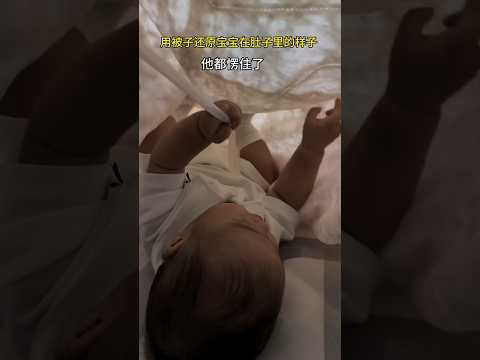
🇨🇳 当父母用被子或毛毯在宝宝周围创造出一个独特的“蚕茧”时,这便触发了他们的触觉记忆。
🇬🇧 When parents use a blanket or a quilt to create a kind of "cocoon" around the baby, this triggers their tactile memory.
🇨🇳 这种紧密的压力会以一种降低压力水平和减缓心率的方式刺激神经系统,让孩子回到绝对安静的状态。
🇬🇧 This dense pressure stimulates the nervous system in a way that reduces stress levels and slows down the heart rate, returning the child to a state of absolute tranquility.
🇨🇳 新生儿无法完全控制自己的四肢,常常会被自己突然的动作吓到——这种现象被称为莫罗反射(当感觉到坠落或巨大的噪音时,手臂会突然张开)。
🇬🇧 Newborns do not have full control over their limbs and are often startled by their own sudden movements—a phenomenon known as the Moro reflex (a sudden opening of the arms upon feeling a fall or a loud noise).
🇨🇳 当宝宝被一条能限制这些杂乱动作的柔软被子包裹时,他就会感到安全。
🇬🇧 When the baby is enveloped in a soft blanket that restricts these chaotic movements, it feels secure.
🇨🇳 这模仿了怀孕的最后几周,当时空间是如此狭窄,以至于每一次移动都会遇到母亲身体柔软而温暖的阻力。
🇬🇧 This mimics the final weeks of pregnancy, when the space was so tight that every movement met the soft and warm resistance of the mother's body.
🇨🇳 出生后,宝宝进入了一个过大、嘈杂、寒冷且充满惊吓刺激的世界。
🇬🇧 After birth, the baby enters a world that is too big, noisy, cold, and full of startling stimuli.
🇨🇳 空间通过被子受到限制,起到了感官过滤器的作用。
🇬🇧 The restriction of space through a blanket acts as a sensory filter.
🇨🇳 他感受到了与在子宫里时一模一样的温暖与隐蔽,这有助于他在几秒钟内平静下来,集中注意力并沉沉入睡,而不会对浩瀚的外界环境感到焦虑。
🇬🇧 It feels the warmth and privacy that are identical to its stay in the womb, which helps it calm down in seconds, focus, and fall into a deep sleep without experiencing anxiety from the vast external environment.
🇨🇳 「家的温暖始于狭窄的空间,它让我们想起了我们的起点。」 —— 佚名
🇬🇧 "The warmth of a home begins in a narrow space that reminds us of our beginning." — Unknown
🇨🇳 相似故事:
🇬🇧 Similar Stories:
🇨🇳 古老的襁褓习俗。几个世纪以来,在几乎所有的人类文明中——从古埃及到传统的欧洲 and 亚洲村庄——用亚麻或棉布将新生儿包裹起来都是一种必不可少的做法。老人们注意到,紧紧包裹着的婴儿哭得更少,睡得更深,因为紧绷的布料弥补了孩子离开母体后失去的支撑感。
🇬🇧 The Ancient Custom of Swaddling. Throughout the centuries, in almost all human civilizations—from Ancient Egypt to traditional European and Asian villages—swaddling newborns in linen or cotton cloths was an essential practice. Elders noticed that a tightly swaddled baby cries less and sleeps deeper, as the taut fabric compensates for the lack of support the child lost after leaving the mother's organism.
🇨🇳 「袋鼠护理」法(皮肤至皮肤)。在现代新生儿科学中,这种方法被极其频繁地使用,特别是在面对早产儿时。孩子被脱光衣服放在母亲或父亲裸露的胸膛上,并盖上温暖的衣服。通过这种方式,宝宝不仅能感受到压力和温暖,还能听到母亲的心跳和声音——这些声音在九个月的时间里一直是他的日常伴侣,从而提供了最快可能的生理稳定。
🇬🇧 The "Kangaroo Care" Method (Skin-to-Skin). In modern neonatology, this method is used extremely frequently, especially for premature babies. The child is placed naked on the bare chest of the mother or father, covered with a warm garment. In this way, the baby not only feels pressure and warmth, but also hears the mother's heartbeat and her voice—sounds that were its constant companion for nine months, providing the fastest possible physiological stabilization.
🇨🇳 关于意志力的伟大历史故事:
🇬🇧 Great Historical Stories of Willpower:
🇨🇳 摩西在尼罗河水中的营救。在古老的圣经故事中,当摩西的母亲被迫将他藏起来以挽救他的生命时,她用纸莎草编织了一个小箱子,涂上沥青和树脂以防漏水,并铺上柔软的织物。将孩子放入这个狭窄、安全且受到河浪摇晃的摇篮中,实际上完美地重现了子宫中羊水的环境。这让婴儿保持完全的平静与安静,没有哭闹,直到箱子被埃及公主发现。
🇬🇧 The Rescue of Moses Among the Waters of the Nile. In the ancient biblical story, when Moses' mother was forced to hide him to save his life, she wove a small basket of papyrus, smeared it with asphalt and pitch to keep it waterproof, and lined it with soft fabrics. Placing the child in this narrow, protected, and river-wave-rocked cradle actually perfectly recreated the conditions of the amniotic fluid in the womb. This allowed the baby to remain completely calm and quiet, without crying, until the basket was found by the Egyptian princess.
🇨🇳 斯巴达乳母的哺育。在古希腊,斯巴达的保姆和乳母因其在抚养健康、平静的孩子方面的精湛技艺而闻名于世。其他城邦的妇女经常雇用她们,因为她们采用了独特的安抚方法。斯巴达妇女拒绝让婴儿在大婴儿床里长时间哭泣——她们将婴儿紧紧地贴在自己的身体上贴身携带,或者以一种不让孩子被黑暗和空间吓到的方式包裹着他们,从摇篮开始就锻造了强健的性格。
🇬🇧 The Upbringing of Spartan Wet Nurses. In Ancient Greece, Spartan nannies and wet nurses were world-renowned for their mastery in raising healthy and calm children. Women from other poleis often hired them because they applied specific methods of calming. Spartan women refused to leave babies to cry long in large cribs—they carried them tightly attached to their bodies or swaddled them in a way that prevented the child from being frightened by darkness and space, forging a strong character straight from the cradle.
#母婴护理 #新生儿安全感 #育儿智慧 #生命的奇迹 #母爱无疆
#MaternalAndInfantCare #NewbornSecurity #ParentingWisdom #MiracleOfLife #MotherLove