Video Description
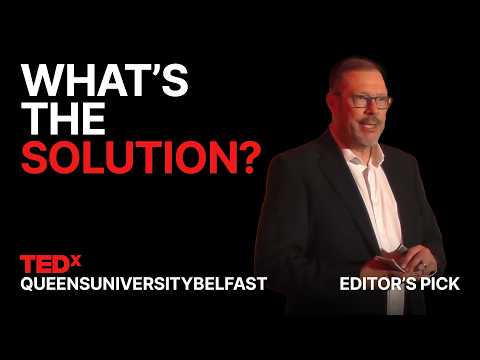
Professor Dominic Bryan argues that nationalism is the problem, not the solution. The talk challenges nationalism, highlighting that the idea of the nation is a contemporary invention – an imagined community born of empires, resistance, and violence. Nations are complex, multicultural spaces, and global challenges such as climate change, poverty, and war demand global, humanitarian solutions.
The talk explores the stories of the past, defined by prevailing views of what constitutes national history, which play a vital role in demarcating the boundaries of a nation. From the history taught in schools to the landscape of memorials, the museums visited, the endless historical TV dramas, and the flags and anthems that inspire loyalty – history shapes national identity. History and nationhood are woven into everyday life.
Professor Bryan points out that nationalism remains extraordinarily divisive and lies at the heart of many global conflicts. Increasingly, inward-looking patriotism and protectionism have emerged, with politicians promoting loyalty to the nation and claims of national greatness as solutions to a wide range of problems.
The talk calls for a critical understanding of nationalism, moving beyond narrow interpretations of history, and asks where a greater global sense of cohesion – based on common humanity and human rights – can be created. Professor Dominic Bryan is a distinguished anthropologist at Queen's University Belfast, renowned for his work on identity, ritual, and conflict in Northern Ireland. Over three decades, he has explored how symbols, parades, and public rituals shape group identity in contested civic spaces. His research has profoundly impacted public policy, contributing to the establishment of the Parades Commission and as Co-Chair of the Flags, Identity, Culture & Tradition Commission. Bryan's scholarship bridges anthropology, history, law, and conflict studies. His landmark monograph Orange Parades (Pluto Press 2000) remains a foundational text in understanding NI's symbolic landscape. Beyond academia, he engages with communities, policymakers, and media to foster dialogue & peacebuilding, exemplifying how ethnographic research informs real-world change. As mentor & thought leader, Prof Bryan continues shaping political anthropology & remains vital in discussions on identity, memory & reconciliation.
This talk was given at a TEDx event using the TED conference format but independently organized by a local community. Learn more at https://www.ted.com/tedx