Video Description
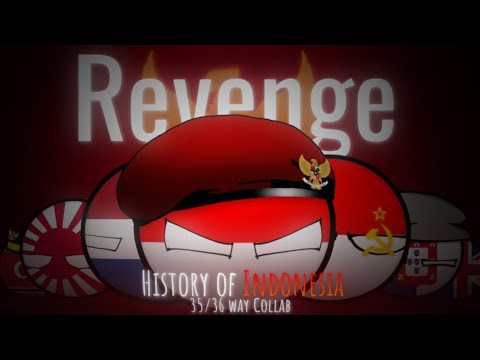
History of Indonesia??????
|| WARNING ||
THIS VIDEO IS FOR EDUCATIONAL AND ENTERTAINMENT ONLY!
THERE'S NO PURPOSES ON MAKING THIS VIDEO A HATE SPEECH OR INSULT ANY RELIGIONS, RACES AND CIES MENTIONED IN THIS VIDEO
Song: Revenge
Rasio video: 16:9
Intro:Gamers1880
Outro: razoball1
Part:
1.@NotZãss
2.@MikailRF_Daop8SBY
3.@razercb1
4.@BadHitbox-lol
5.@NOVA_BALLS
6.@H_Edits156
7.@ZenFis_eRYTs
8.@Faronesia_CB
9.@Kuro-2.010
10.@ChangeChann
11.@Gamers1880_official
12.@Venesia2011
13.@nedergium_ballz27
14.@Est-Idn
15.@blockBoundIsPeak
16.@FAIQ_BALLZ
17.@RedzGeneral
18.@FaithHammam0412
19.@Ibnu_Cb
20.@Astroo.ball_Official1031
21.@Mandoball_Real
22.@XenoZ_BalL
23.@AHM_CB
24.@utttx
25.@nheodimity64
26.@D_ballz97
27.@RestuNCH
28.@arqantherailfans
29.@The1nonlyHadzz
30.@Frn_15409
31.@brawnessky_artYT
32.@Zahrizqah
33.@I_BALLSS
34.@idunno1488
35.@Luqzsiaballs
36.@keysha_cb
complete history :
Indonesia's history from colonization to 2025 is marked by a transition from a diverse pre-colonial archipelago to a nation-state after a period of Dutch and Japanese colonial rule. The pre-colonial period saw the rise of various kingdoms and the influence of Hindu, Buddhist, and Islamic cultures. Colonialism, primarily Dutch, led to significant economic and political shifts, culminating in a nationalist movement and the declaration of independence in 1945. Following independence, Indonesia faced internal conflicts, including periods of authoritarian rule, before transitioning to a more democratic system.
Pre-Colonial Period (Prior to 16th Century):
Early Civilizations:
The archipelago was home to diverse kingdoms and societies, influenced by trade and cultural exchanges with India, China, and other regions.
Hindu and Buddhist Influences:
Hinduism and Buddhism spread through trade and cultural exchanges, shaping religious and cultural practices, evidenced by temples like Borobudur and Prambanan.
Srivijaya and Majapahit:
The Srivijaya kingdom (7th century) and the Majapahit kingdom (13th-16th centuries) exerted significant influence, particularly in trade and governance.
Rise of Islam:
Islam gradually spread from the 13th century onwards, becoming dominant in Java and Sumatra, blending with pre-existing traditions.
Colonial Period (16th Century - 1945):
Dutch East India Company (VOC):
The VOC established a powerful presence, particularly in Java, through trade and military dominance.
Dutch East Indies:
The Dutch gradually expanded their control, eventually encompassing most of the archipelago, forming the Dutch East Indies.
Cultivation System:
The Dutch introduced the Cultivation System, forcing Javanese farmers to produce crops for export, leading to economic exploitation.
Japanese Occupation:
During World War II, Japan invaded and occupied the Dutch East Indies, which further fueled nationalist sentiments.
Proclamation of Independence:
Following Japan's surrender, Sukarno and Hatta declared Indonesia's independence on August 17, 1945.
Post-Colonial Period (1945 - 2025):
Revolution and War:
Indonesia fought for its independence against the Dutch, eventually leading to the Dutch recognition of Indonesian sovereignty in 1949.
Sukarno's Era:
Sukarno, the first president, led the country through a period of national development and non-alignment.
New Order (Suharto):
Suharto's regime, characterized by authoritarian rule, brought about significant economic growth but also human rights abuses.
Reformation Period:
The fall of Suharto in 1998 ushered in a period of political and economic reforms, including the establishment of a more democratic system.
Modern Indonesia:
Indonesia continues to grapple with issues of economic inequality, corruption, and regional tensions while striving for greater political and social stability.
Key Events and Trends:
Krakatoa Eruption:
The devastating eruption of Krakatoa in 1883 had a significant impact on the region, leading to a large tsunami.
Indonesian Youth Pledge:
The 1928 youth conference laid the foundation for the concept of "one nation, one language, one people" for Indonesia.
West Papua Conflict:
Opposition to Indonesian rule in West Papua (formerly Dutch New Guinea) has persisted, with ongoing calls for independence.
ASEAN Membership:
Indonesia plays a key role in ASEAN, a regional organization promoting economic and political cooperation.
Economic Development:
Indonesia has made significant strides in economic development, becoming a major player in the global economy.
Economic Inequality and Poverty:
Addressing the gap between the rich and poor remains a significant challenge for the Indonesian government.
hopefully entertained and understand :)