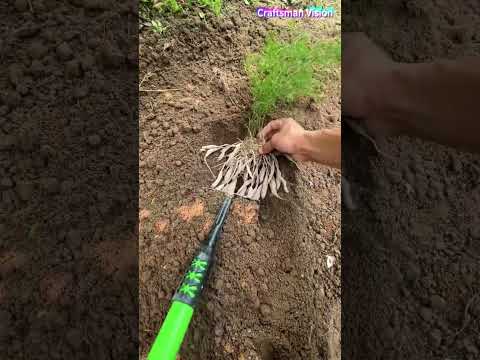
Video Description
This video shares the high-yield planting technology of Radix Asparagi. As a classic traditional Chinese medicinal herb, Radix Asparagi features mild medicinal properties and high medicinal value, widely applied in health conditioning and medicinal formula compatibility. It enjoys a stable market and growing market demand. Radix Asparagi has strong adaptability, yet standardized and scientific planting and management techniques tailored to its growth habits are essential to achieve high yield with good quality, improve herb appearance and increase planting economic benefits. The core planting techniques are summarized as follows:
1. Site Selection, Soil Preparation and Seedling Cultivation
Radix Asparagi favors cool and humid environments and is intolerant of waterlogging. It is suitable for planting in sandy loam soil with loose texture, fertile nutrients, deep soil layer and good drainage, while low-lying and clayey fields prone to water accumulation should be avoided. Before planting, deeply plow and turn over the soil, remove stones, weeds and residual roots, break up soil clods and level the field. Combined with deep plowing, decomposed organic fertilizer is applied as base fertilizer to improve soil fertility. High-quality seeds with full grains, no mildew and strong disease resistance or robust seedlings are preferred. Shading and moisture management shall be properly conducted during the seedling stage to cultivate strong seedlings with well-developed root systems, laying a solid foundation for high yield.
2. Scientific Transplanting and Field Management
The transplanting density shall be reasonably controlled according to field fertility to ensure adequate ventilation, light transmission and balanced nutrient supply in the field. Thoroughly water the seedlings with root-fixing water after transplanting to help them adapt to the field environment and survive quickly. Adhere to the principle of "fertilizing thinly and frequently" during the growth period. Nitrogen fertilizer is mainly applied at the seedling stage to promote branch and leaf growth, while phosphorus and potassium fertilizers are increased in the middle and late stages to boost tuber expansion and development. Timely remove field weeds to prevent them from competing for water, fertilizer and sunlight. Water in a timely manner during droughts and dredge ditches to drain stagnant water in rainy seasons to effectively prevent root rot caused by waterlogging.
3. Disease and Pest Prevention and Plant Pruning
Radix Asparagi is less susceptible to diseases and pests. The whole planting process adheres to the principle of "prevention first and comprehensive green prevention and control". Keep the field clean and well-ventilated to reduce the breeding of diseases and pests from the source. Conduct regular field inspections, and promptly pull out and remove diseased and weak plants to prevent the spread of diseases. For plants with overgrown vines and dense branches and leaves, thin out weak branches and leaves in a timely manner to optimize field ventilation and light conditions, reduce disease risks, and concentrate nutrients on tuber growth.
4. Timely Harvesting to Ensure Herb Quality
As a perennial medicinal herb, Radix Asparagi can be harvested 2 to 3 years after planting. The optimal harvesting period is from the withering of above-ground vines in autumn and winter to before soil freezing. At this stage, nutrients of the plant are fully accumulated in the tubers, resulting in the highest content of active medicinal ingredients and superior herb appearance. Excavate carefully during harvesting to avoid damaging the tubers. After digging out the complete root system, remove soil, fibrous roots and damaged parts to guarantee high-quality intact medicinal materials.
5. Post-harvest Treatment and Field Maintenance
After harvesting, high-quality Radix Asparagi tubers shall be sorted and graded in a timely manner, with damaged, mildewed and underdeveloped inferior products eliminated. Store the finished products in a cool, dry, ventilated and clean environment to avoid moisture, mildew and insect infestation. After harvesting, thoroughly clean up residual vines and weeds in the field, deeply plow the soil and supplement organic fertilizer to improve soil structure and restore soil fertility, preparing the field for crop rotation and subsequent maintenance.