Video Description
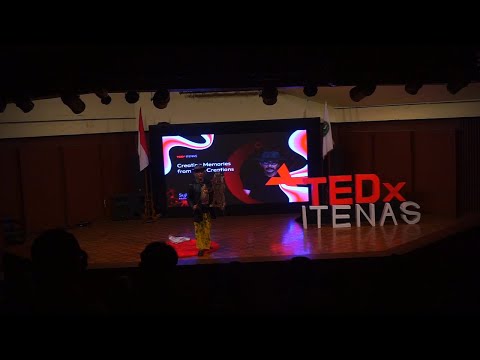
This talk challenges the assumption that technology is inherently meaningful simply because it is advanced or widely adopted. Using the metaphor of the wayang (shadow puppet)—lifeless until animated by the puppeteer's hands and soul, Sudjiwo Tejo argues that technology, no matter how sophisticated, remains an empty pattern without human values breathed into it. A puppet does not move with justice or feeling on its own; neither does a machine.
Drawing from his personal journey across traditional arts like wayang and gamelan and modern music, he reveals how cultural heritage shapes a deeper understanding of creativity. He reframes happiness not as a reward waiting at the finish line of achievement, but as a spontaneous inner state that should fuel creation, not follow it.
He calls on audiences to stop fearing technology and start engaging with it responsibly and soulfully, recognizing that while machines can "talk" and "hear," only humans truly speak and listen, carrying empathy in every exchange. Just as every person holds both light and shadow within them, technology too sits at that threshold: a cocoon, neither dark nor radiant on its own. What it becomes depends entirely on the human heart guiding it. Sujiwo Tejo is a traditional puppeteer of Javanese wayang kulit, wayang orang, and Madurese wayang topeng. He studied Mathematics at the Department of Mathematics, Bandung Institute of Technology, and Civil Engineering at the Department of Civil Engineering, Bandung Institute of Technology from 1980 to 1988. He is frequently invited to give lectures on mathematics, including at TEDx Bandung with the topic “Math: Finding Harmony in Chaos.” He views mathematics as an orchestration of concepts and music as audible mathematics, emphasizing pattern recognition rather than calculation. His interdisciplinary perspective connects mathematics, civil engineering, spirituality, music, literature, visual arts, theater, film, and cultural discourse, all of which he considers integral parts of pedalangan. Although often labeled by the media as a multi-talented artist, he identifies himself simply as a dalang whose creative process requires mastery of multiple artistic and intellectual domains. This talk was given at a TEDx event using the TED conference format but independently organized by a local community. Learn more at https://www.ted.com/tedx