Video Description
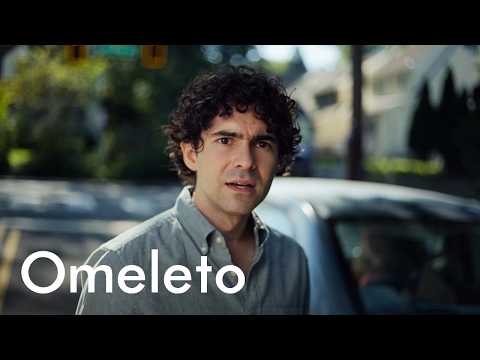
A man hits a car.
Gabe and Julia are a young couple seeking to take the next step in their relationship. However, they still have some issues to resolve. While out driving, they argue about moving in together, but their fight is interrupted when they're rear-ended at a stop sign.
The other driver happens to be Gabe's therapist, Dr. Cobb, and what seems like a commonplace accident devolves into an impromptu therapy session, much to nearly everyone's chagrin.
Directed by Brian Herrera Gladstone and written by Jake Goldin, this witty, sharp short comedy is about collisions: a literal one in which a bickering couple at a turning point in their relationship is rear-ended, as well as figurative ones, as agendas and approaches to life and relationships collide, resulting in anxiety, confusion and outright conflict. The visuals have a poised, low-key naturalism, but the clever, sly dialogue and quicksilver pacing convey how we dance around the heart of emotional matters, no matter how much therapy we've done or enlightenment we've achieved.
We get a brief moment with the couple as they're driving, arguing about moving in together. In the midst of an ongoing disagreement, they're annoyed with one another, but before their argument can escalate into a more cataclysmic register, they're hit from behind by another car driven by Gabe's therapist. Played by actors Bartley Booz and Leigha Sinnott, Gabe and Julia's back-and-forth carries passive-aggressiveness, references to their intertwined lives and an ability to push one another's buttons in just the right way, and their conflict is the emotional anchoring of the story, both relatable and grounded.
But when Gabe's therapist enters the scene, he brings a more overt comedic note to the film. Dr. Cobb is a counselor who never drops the therapeutic mode; every encounter is an opportunity for "growth" and understanding, played by actor Greg Wood with total commitment to an air of sanctimonious equanimity, though with hints of the dysfunction underneath. After subtly avoiding fault for the accident, Dr. Cobb then invites an agitated Gabe to download his thoughts in an impromptu therapy session, and what emerges is a deeper set of fears about moving in. But when Julia joins them, trying to figure out what is happening, she relays her own doubts and fears, and the pair achieve a genuine honesty and understanding.
A deft, compact blend of spiky relationship observations, situational comedy and amusing characters, FENDER BENDER is a gentle satire on therapy, and how navel-gazing can actually allow us to escape the hard facts and actions that life requires us to face. The film's character work and dialogue are a real pleasure, but its sly insight is noting how humans are experts on avoidance and ambivalence, no matter how evolved they think they are, and how many of our fights and heartaches are actually about deeper fears and doubts we don't want to face. The human condition, it seems, is inclined to messiness, no matter how much we try to tame it. In a funny, roundabout way, therapy does work in the end, but genuine growth often calls in a hefty bill eventually.
FENDER BENDER. Courtesy of Brian Herrera Gladstone at https://bhgladstone.com.