Video Description
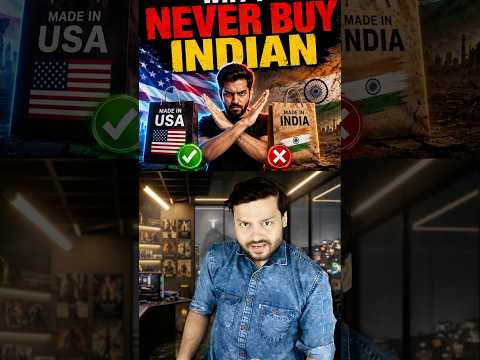
Prime Minister Narendra Modi has recently renewed his push for “Swadeshi” and “Vocal for Local,” urging Indians to consciously support products made in India and strengthen domestic manufacturing. In recent speeches tied to the broader “Atmanirbhar Bharat” vision, he argued that everyday purchasing decisions are not just consumer choices but economic decisions that influence jobs, industrial growth, and national self-reliance. According to Modi, when Indians choose locally produced goods, more wealth circulates inside the country through factories, workers, retailers, logistics, taxes, and reinvestment into Indian businesses.
An interesting part of this conversation is that many Indians already buy Indian products without realizing it. Several successful Indian brands deliberately use European- or British-sounding names because premium branding in fashion and lifestyle industries has historically been associated with the West. As a result, consumers often assume these companies are foreign even though they are Indian-owned, manufacture substantially in India, and employ thousands of Indians.
Take brands like Louis Philippe, Peter England, and Allen Solly. Their names sound British or European, but they are deeply tied to Indian industry through design, retail, sourcing, manufacturing, and employment. Similarly, La Opala sounds Italian or Spanish to many consumers, yet it is a successful Indian luxury tableware manufacturer exporting products globally. Other examples include Da Milano, Monte Carlo, and Flying Machine.
This creates a modern interpretation of “Swadeshi luxury.” Instead of assuming that premium quality must come from Europe or America, Indian consumers can increasingly buy high-end products from Indian companies that compete globally in design and quality. A Louis Philippe suit, a Peter England shirt, a La Opala dinner set, or a Da Milano leather bag may project international styling, but the economic value generated from those purchases substantially supports Indian businesses, Indian workers, and Indian tax revenues.
The broader economic idea behind Modi’s message is not necessarily complete rejection of foreign brands, but rather building confidence in Indian manufacturing and encouraging consumers to prioritize competitive Indian alternatives where possible. India’s domestic market is massive, and when Indian brands scale successfully within the country, they gain the ability to expand internationally, create exports, and build globally recognized Indian-origin luxury labels.
In many ways, this reflects a shift in how “Swadeshi” is being redefined in modern India. During the independence movement, Swadeshi was largely about rejecting colonial imports. Today, the newer version is more about strengthening domestic value creation in a globalized economy. Indian companies may still use international branding styles, import some raw materials, or operate globally, but the core ownership, employment, and wealth generation remain substantially Indian.
That is why Modi’s recent statements resonate with many supporters of domestic industry. The argument is that Indians no longer need to choose between nationalism and quality, or between luxury and local manufacturing. The goal is to create an ecosystem where world-class products can be designed, produced, and consumed within India itself — allowing consumers to enjoy premium lifestyles while simultaneously contributing to the growth of the Indian economy.
Subscribe to FactTechz