Video Description
Start your two-week free trial of the BWS+ app: https://bws.plus/17a
Most fitness advice assumes everyone responds the same way, when people are really starting from very different starting points ("body types"). How to lose fat and how to build muscle slightly differs depending on what starting point you're at. In this video, we also break down common questions like “what body type am I” and how to determine your body type, where somatotype ideas fit in, and how that affects muscle growth. We'll cover "how to fix skinny fat", and more!
Thanks to Regen Recovery for setting up DEXA scans for our participants! Check them out here: https://bit.ly/42XEv8R
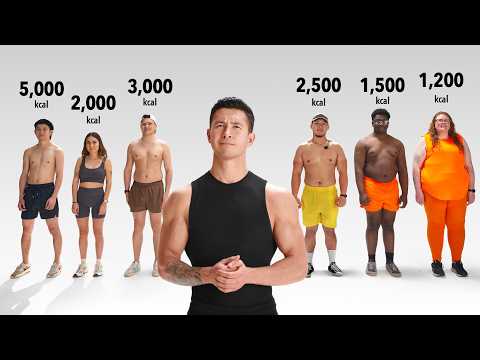
Men and women with very different physiques went through DXA scans, strength testing, and the doubly labeled water test to measure actual calorie burn and intake. Four starting body type categories emerged: skinny, skinny fat, bulky, and high body fat.
The skinny body type is lean, slender, and low in muscle mass. Aaron fits that look well: lean at 13% body fat, but below average in muscle. Maria weighed 97 pounds and wanted to feel stronger, especially in her upper body. Low muscle mass did not just affect performance. Her bone density was lower than 72% of others her age.
Skinny fat looks similar in clothes, but underneath there is more body fat and not enough muscle, often around the belly and love handles. This body type is common because the average person gains 1 to 2 pounds a year, and without proper resistance training, most of that goes to fat. Everyone in this group also had lower than average muscle mass. Luckily "how to fix skinny fat" is actually quite simple, and we'll get to the exact skinny fat fix later on.
The bulky body type carries above-average muscle, but also enough body fat to hide a lot of that definition. Sahil and Eric fit that category well. Eric’s FFMI was just shy of the natural ceiling for muscle, but both men were in the high twenties for body fat. Melody showed a similar pattern after five years of lifting: plenty of muscle, but a fat-loss plan made more sense than building more size.
The final category is high body fat, defined here as over 30% body fat for men and over 40% for women. AJ and Michelle fit that group. Despite not training, both had more muscle than many of the other participants. But the extra weight made movement harder and came with more obvious health concerns. This is also where old somatotype labels can be less useful than actual body-composition data.
No one tested had an abnormally fast or slow metabolism. Aaron’s resting burn was only about 1,500 calories per day, normal for his size, but his activity burned another 2,708, putting his total daily burn at 4,221. That is why he could eat about 1,000 calories more than AJ despite weighing far less. Maria stayed skinny for a different reason: her intake of 2,080 calories was close to her own prediction, suggesting she paid close attention to what she ate.
Two patterns showed up in the skinny fat group: underestimated calorie intake and weak or inconsistent resistance training. The bulky group burned much more. Sahil and Melody were both over 3,000 calories per day, helped by activity and muscle, which is metabolically active — each pound burning roughly 10 extra calories per day at rest. But that advantage got canceled out when intake was underestimated. Melody thought she was eating 1,800 to 2,200 calories; she was actually at 3,300.
For the high body fat group, intake again outweighed metabolism. Michelle was eating 3,900 calories a day. AJ was eating almost 800 calories more than he guessed. Two added factors showed up here: subconscious movement, which differs a lot person to person, and the brain’s reward response to food, which may make some people more likely to overeat and feel less full.
The training and diet approach changes depending on the starting point. Skinny people need a slight calorie surplus and three full-body workouts per week. Skinny fat people are usually the best candidates for body recomposition (lose fat and build muscle at the same time): hard lifting, a small calorie deficit, and higher protein to build muscle while losing fat. Bulky body types usually do not need a different workout plan — they need better food tracking and a moderate deficit. High body fat body types often just need better habits and a clear "why".
Shoutout to Jeff Nippard for inspiring the visual direction of this video, from his "Body Fat %" video!
0:00 - 0:40 The Body Type Test
0:41 - 2:04 Skinny: What It Looks Like
2:04 - 4:45 Skinny-Fat: What It Looks Like
4:46 - 6:12 Bulky: What It Looks Like
6:13 - 9:02 High Fat: What It Looks Like
9:03 - 13:53 Skinny: What Causes It
13:54 - 16:34 Skinny-Fat: What Causes It
16:35 - 20:20 Bulky: What Causes It
20:21 - 22:24 High Fat: What Causes It
22:25 - 23:11 Skinny: The Fix
23:12 - 24:53 Skinny-Fat: The Fix
24:54 - 26:15 Bulky: The Fix
26:26 - 27:53 High Fat: The Fix
27:54 - Your Custom Plan